If you wake up with a stiff back or feel your lower back getting heavier after a full day at your desk, you are not alone. Long hours of sitting and less movement in your 30s and 40s can weaken the muscles that protect your spine and make everyday pain more common.
The good news is that even a short, gentle routine can make your back feel noticeably lighter. This 15-minute back stretch routine is designed for students, desk workers, and anyone who spends most of the day sitting.
We will move in three simple phases:
- 5 minutes to gently wake up your spine
- 5 minutes to stretch your lower back and hips
- 5 minutes to activate the core muscles that support your back
Move slowly, breathe steadily, and never push into sharp or shooting pain.
Phase 1 – 5 minutes to wake up your back
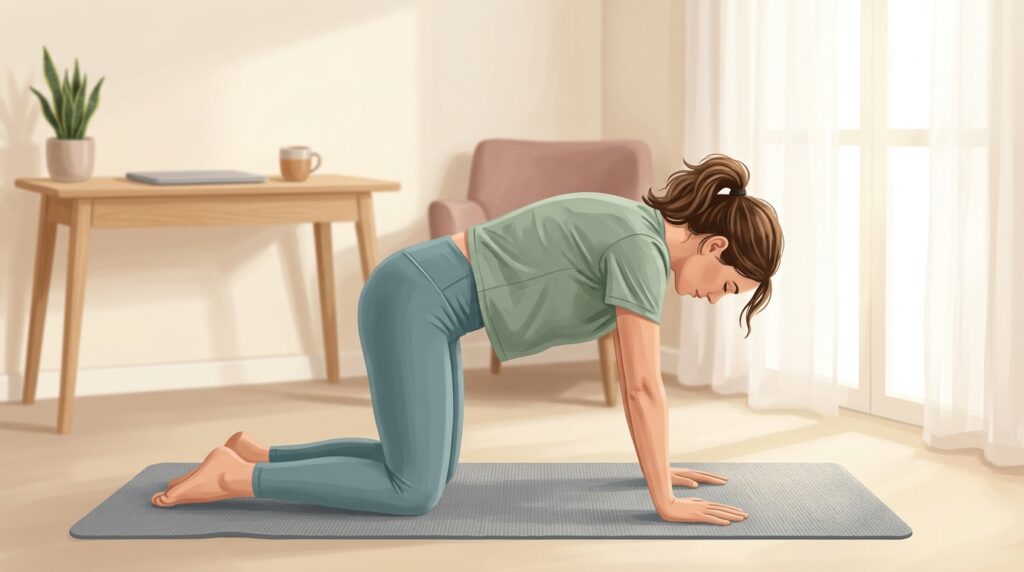
Start on all fours with your hands under your shoulders and your knees under your hips.
Move into a slow Cat–Cow: as you exhale, round your back toward the ceiling and gently tuck your chin; as you inhale, let your belly sink toward the floor and open your chest forward. Repeat about 10 times, following your breath. This helps your spine move smoothly again after a night’s sleep or a long day of sitting.
Next, lie on your back and place your right ankle across your left thigh to make a figure 4 shape.
Grab the back of your left thigh and gently pull your legs toward your chest until you feel a stretch deep in your right hip and glute. Hold for about 20 seconds, breathing slowly, then switch sides. This figure 4 stretch relaxes the muscles that often tighten and contribute to lower back pain.
Repeat the stretch 2 times per side. By the end of this first phase, your spine and hips should feel a little warmer and more awake.
Phase 2 – 5 minutes to lengthen your lower back and hips
Stay on your back and hug both knees toward your chest.
Gently press your lower back into the floor as you exhale, letting the muscles around your spine soften. Hold for about 20 seconds, then rest and repeat once more. This simple knees-to-chest stretch is one of the classic moves recommended to ease lower back tension.
Next, place your feet back on the floor with your knees bent.
Let both knees slowly drop to one side while keeping your shoulders relaxed on the mat, and turn your head in the opposite direction. You should feel a comfortable twist along the side of your waist and into your hip. Hold for 20–30 seconds, then switch sides. Avoid bouncing or forcing the movement; the goal is a gentle, sustained stretch.
If you are new to back stretches, pay attention to your breathing here. Inhale through your nose, exhale through your mouth, and try to let each exhale soften any tight areas around your lower back and pelvis.
Phase 3 – 5 minutes to support your back with your core
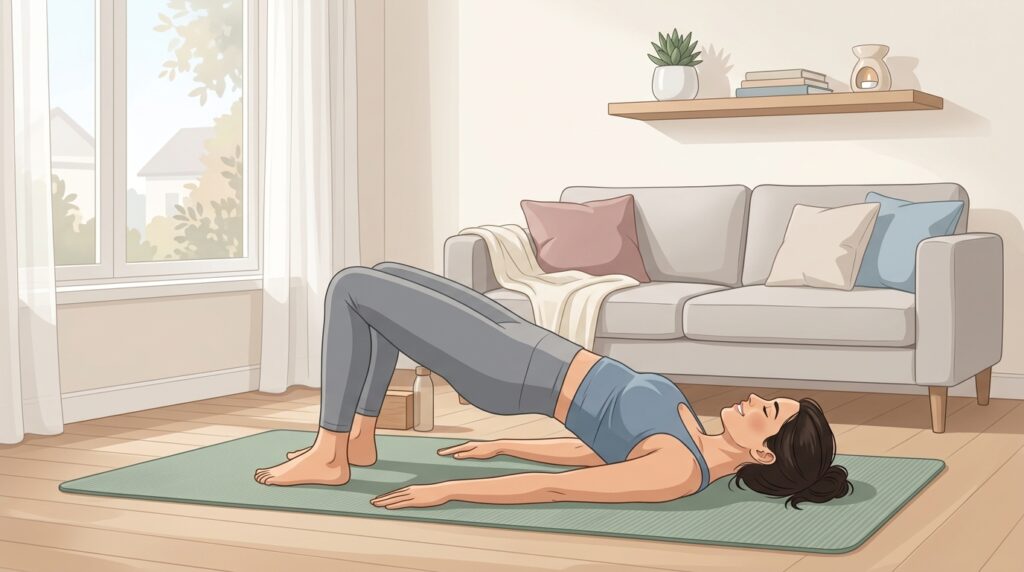
For the final part of the routine, we will lightly wake up the muscles that support your spine.
Lie on your back with your knees bent and feet flat on the floor. Tighten your abdominal muscles just enough to feel some support around your waist. Press through your heels and slowly lift your hips off the floor into a gentle bridge position so your shoulders, hips, and knees form a soft straight line. Hold for 2–3 seconds, then lower back down with control.
Aim for 10–15 repetitions. This exercise works your glutes and core together, which can help reduce stress on your lower back over time when done regularly.
To finish, come into Child’s Pose. Kneel on the floor, sit your hips back toward your heels, and fold your chest toward the mat with your arms stretched forward or resting by your sides. Let your forehead rest on the floor or a cushion. Take slow, deep breaths for 30–60 seconds and imagine the tension along your spine melting down toward the ground.
How to use this 15-minute routine
This short back stretch routine can be done on a mat, carpet, or even a firm bed, and it fits easily into a busy schedule.
It combines three key elements that many clinics and health organizations recommend for managing everyday lower back pain: gentle mobility, targeted stretching, and light strengthening of your core and hip muscles.
For the best results:
- Start with this routine once a day, especially after you wake up or after a long period of sitting.
- Stay within a comfortable range of motion—aim for a “good stretch” feeling, not sharp pain.
- If any movement causes numbness, tingling, or worsening pain, stop and check with a healthcare professional before continuing.
If 15 minutes already feels full, simply keep this version for a few weeks. On days when you have more energy and time, you can add an extra set to each exercise and turn it into a 30-minute routine.
Related 15-Minute Routines You Might Like
If long desk hours also leave your neck and shoulders feeling tight, try this follow-up routine:
15-Minute Neck and Shoulder Stretch Routine for Desk Workers – focused stretches to release tension that builds up from computer and phone use.
On days when your whole body feels heavy after sitting or studying for many hours, this can be a good companion routine:
15-Minute Full-Body Stretch Routine for Long Study Sessions – a gentle full-body sequence to wake up stiff hips, back, and shoulders at once.
If your lower back tends to feel worse at night, you can also add an evening routine:
15-Minute Bedtime Stretch Routine to Reduce Lower Back Strain – a calming series of stretches you can do on your bed before sleep.
FAQ: Back stretch routine for desk workers
Q1. How often should I do this 15-minute back stretch routine?
If you deal with regular lower back stiffness from sitting, doing this routine once a day is a good starting point. On days when you sit for many hours, you can also repeat just one phase—such as the mobility or stretching part—to break up long periods of sitting.
Q2. What if I feel pain, numbness, or tingling during one of the exercises?
A gentle stretch or mild muscle effort is normal, but sharp pain, burning, numbness, or tingling down the leg are warning signs. If you notice these symptoms, stop the exercise, return to a neutral position, and rest. If the symptoms continue or get worse, consult a healthcare professional before continuing the routine.
Q3. Can I still do this routine if I already have a gym or workout schedule?
Yes. This 15-minute back stretch routine is meant to complement your existing training, not replace it. Even if you lift weights, run, or do other sports, long periods of sitting can still create stiffness in your spine and hips, so a focused back routine helps balance out your day.
Q4. Do I need any equipment or a yoga mat to follow this routine?
You do not need any special equipment. A yoga mat, carpet, or firm bed is usually enough to perform the stretches and core work comfortably. If your knees or elbows are sensitive, you can add a folded towel or small cushion for extra padding.
Q5. How long will it take before I notice a difference in my back?
Some people feel lighter and more relaxed in their lower back immediately after the first session. For longer-lasting change, aim to practice the routine most days of the week for several weeks. Consistency is more important than intensity, especially if your back has been stiff for months or years.
Further reading on lower back pain and sitting
If you would like to read more about exercises and self-care for lower back pain, this Mayo Clinic overview explains common causes, general treatment options, and when to see a doctor:
https://www.mayoclinic.org/healthy-lifestyle/adult-health/in-depth/back-pain/art-20546859
Leave a Reply