Hip & Pelvic Movement Break for People Who Sit All Day
Staying in one position for a long time can contribute to discomfort. This is an optional movement break, not a fix for a diagnosed hip or back condition.
Prolonged static sitting can contribute to muscle fatigue and discomfort even when the position looks neutral. Changing position and taking periodic movement breaks may help some computer workers feel more comfortable, but hip or back pain can have many causes.
This 15-minute routine is gentle, floor-and-chair based, and needs no equipment.
Before you start
Ease into each position and keep your movements smooth and controlled — never bounce or force a stretch. A gentle pull is the goal, not pain. Stop if you feel sharp pain in the hip, groin, or lower back, or any numbness down the leg. If you have a hip condition or a recent injury, check with a professional first.
The 15-minute routine
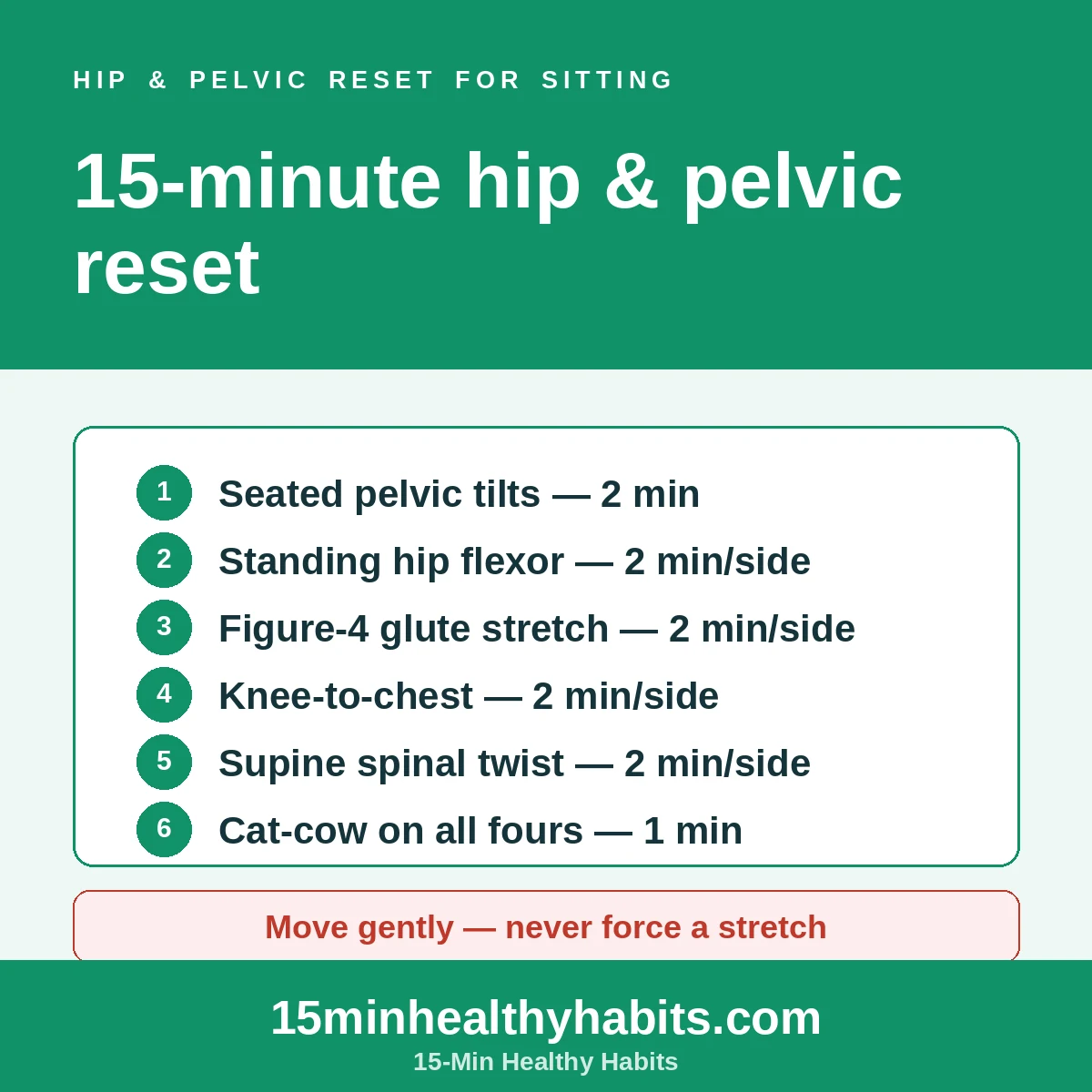
1. Seated pelvic tilts (2 min)
Sit tall on the edge of your chair. Slowly roll your pelvis forward to arch your lower back, then roll it back to round it — like pouring water out of a bowl and back in. Keep the range comfortable.
2. Standing hip flexor stretch (2 min each side)
Step into a short lunge, back knee soft, and gently tuck your tailbone under until you feel a mild stretch across the front of the back hip. Skip the movement if it increases hip, groin, back or leg symptoms.
3. Figure-4 glute stretch (2 min each side)
Sitting, cross one ankle over the opposite knee and hinge forward from the hips with a flat back until you feel a mild stretch in the glute. Switch sides without forcing the knee.
4. Seated or lying knee-to-chest (2 min each side)
Lying on your back (or seated), draw one knee gently toward your chest and hold only within a comfortable range, then switch sides.
5. Supine gentle spinal twist (2 min each side)
Lie on your back, knees bent, and let both knees drop slowly to one side while your shoulders stay down. Keep the range small if needed and stop if symptoms travel down a leg.
6. Cat-cow on all fours (1 min)
On hands and knees, alternate arching and rounding your back with your breath. Use a gentle range rather than trying to reach an end position.
Why change position?
Back and hip discomfort are multifactorial, so this page does not assign symptoms to a single muscle or posture. The practical aim is simply to interrupt a prolonged static position. Stand, walk or change posture when convenient, and seek individual advice when symptoms persist.
Feeling it more in your back?
If the ache sits squarely in your lower back, pair this with our desk stretches for lower back pain. Or pace a custom session with the free 15-minute stretch routine builder.
As an Amazon Associate, 15-Min Healthy Habits earns from qualifying purchases. Some links on this page are affiliate links — at no extra cost to you.
When to see a professional
Seek medical advice if hip or back pain is severe, worsening, follows an injury, persists for a few weeks or limits normal activity. Get urgent help for rapidly worsening weakness, symptoms in both legs, saddle-area numbness, or bladder or bowel changes.
Sources reviewed
This article shares general wellness information and is not medical advice. Everyone's body is different — listen to yours, and consult a qualified professional for persistent or serious pain.