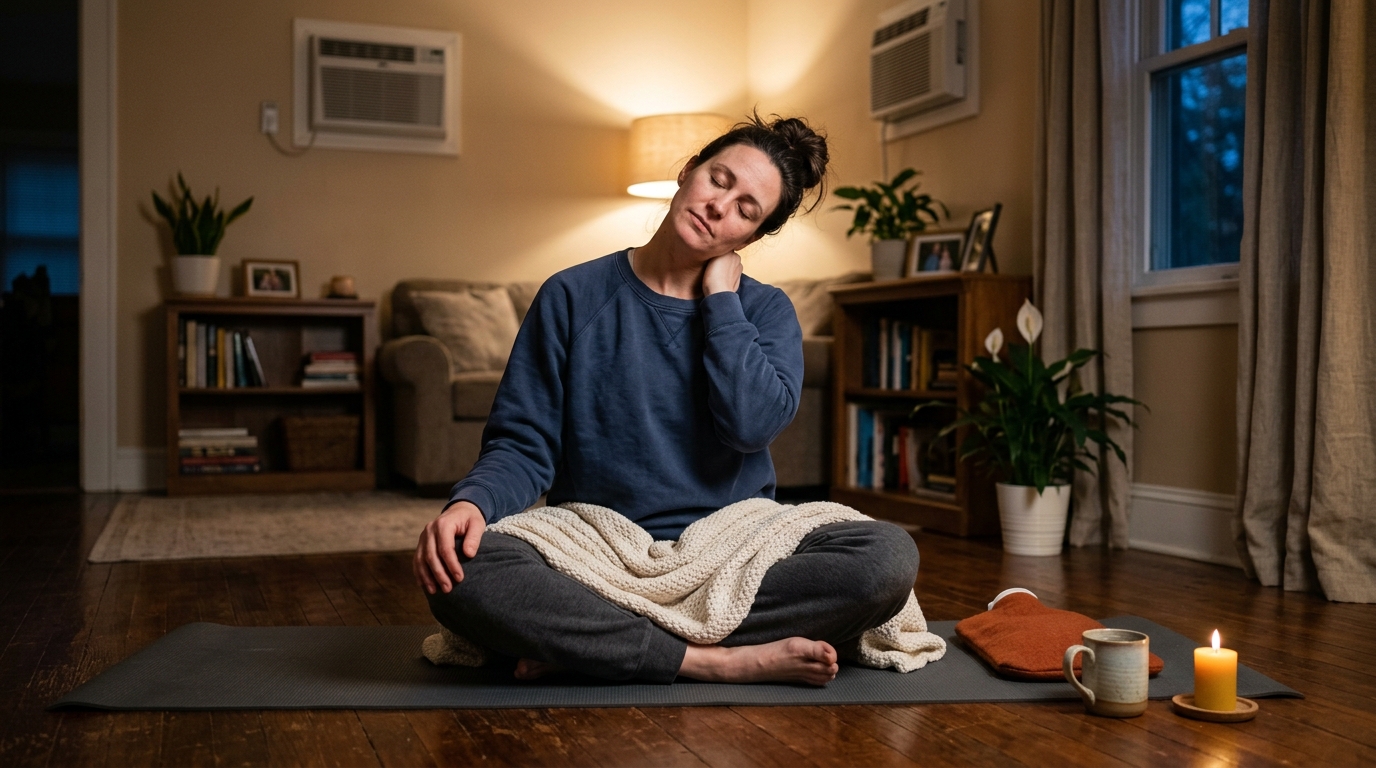
After spending a whole day under strong air conditioning, it is common to feel chilled, stiff around your neck and shoulders, and vaguely run-down.
Even after a warm shower, that “coming down with something” feeling can linger and make you worry about waking up sick the next day.
When you feel like this, pushing through a hard workout is usually not the best idea.
Instead, a short full-body recovery routine that gently loosens your muscles and slowly warms you back up can fit your body’s needs much better.
In this guide, you will learn a simple 15-minute routine—10 minutes of gentle full-body stretches plus 5 minutes of breathing and warmth—that you can use on days when air conditioning and summer fatigue leave your body feeling off.
Think of it as a way to softly bring your body back toward its normal state rather than forcing it to perform.
Why a 15-Minute Recovery Routine Helps After AC Exposure
Spending long hours in a cold environment can lower your body temperature and make your muscles and joints stiff more easily.
Cold air can reduce blood flow to the muscles, which may increase fatigue, tightness, and general discomfort, especially in the neck, shoulders, and back.
Health information sources often recommend light physical activity, regular movement, and keeping indoor temperatures at a reasonable level to help prevent “air conditioning syndrome” and support recovery from summer fatigue.
A short stretching and warming routine is not meant to treat disease; it is a way to gently improve circulation, lengthen tight muscles, and help your body shift out of that cold, sluggish state.
A 15-minute routine is short enough to fit into your evening but long enough to make your body feel noticeably different before bed.
Overview of the 15-Minute Full-Body Recovery Routine
This routine takes about 15 minutes in total:
- Around 10 minutes of gentle full-body stretching
- Around 5 minutes of breathing and warmth (heat pack + warm tea, if you like)
You will move slowly and avoid forcing any position.
The focus is on long, comfortable stretches and easy breathing, not on strength or high intensity.
If you feel dizzy, unusually short of breath, or experience sharp pain at any point, stop the routine and rest.
If symptoms persist or worsen, consult a healthcare professional.
Full-Body Stretching (About 10 Minutes)
1) Neck and Shoulder Release (About 3 Minutes)
You can do this either sitting on a chair or standing in a relaxed stance.
- Straighten your back gently so your spine feels long.
- Inhale as you slowly raise your shoulders up toward your ears, then exhale as you let them drop down with a soft “release.” Repeat this 5 times.
- Next, tilt your head slightly to the right.
- Place your right hand lightly on the left side of your head—not pulling hard, just adding gentle support—until you feel a mild stretch along the left side of your neck. Hold for about 15 seconds.
- Repeat on the other side, doing 2 rounds per side.
Stay within a comfortable range: you should feel only a gentle stretching sensation, not sharp, electric, or stabbing pain.
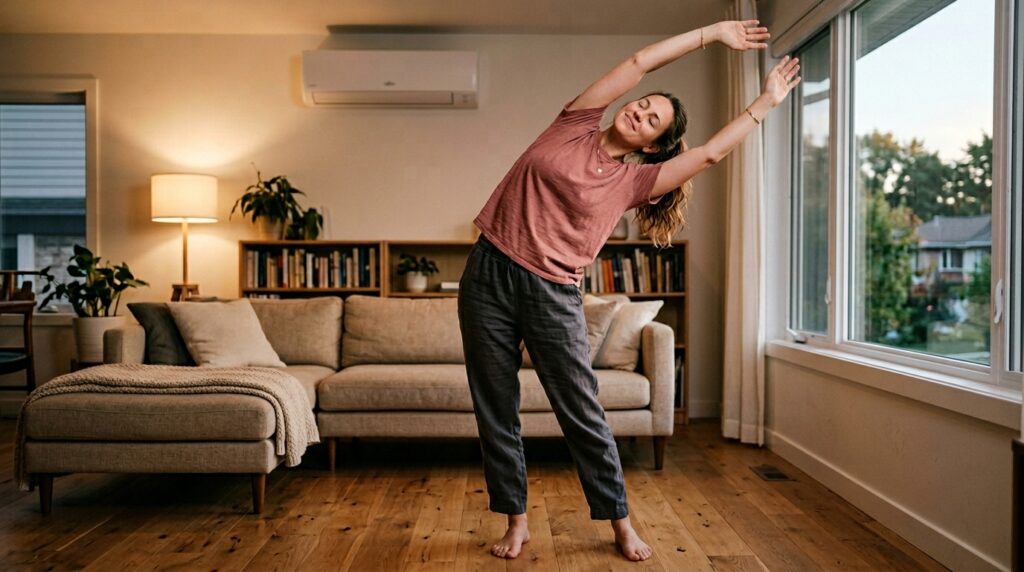
2) Chest and Side Stretch (About 3 Minutes)
This stretch helps open up the front of your body and your ribcage, which can feel tight after hunching in cold indoor air.
- Interlace your fingers and extend your arms forward at chest height, palms facing away.
- Inhale and slowly raise your arms overhead, feeling the area around your ribs gently open.
- Exhale as you lower your arms back down. Repeat this 3 times.
Then move into a side stretch:
- Raise your right hand overhead and let your left hand rest by your side or on your hip.
- Gently lean your torso to the left, feeling a comfortable stretch along the right side of your ribcage and waist.
- Breathe in through your nose and out through your mouth, holding for about 15 seconds.
- Slowly return to the center and repeat on the other side.
Do 2 rounds per side, moving slowly and staying within a pain-free range.
3) Lower-Body and Back Stretch (About 4 Minutes)
This step focuses on your calves, hamstrings, and lower back.
- Calf Stretch with Support
- Stand facing a wall, chair back, or counter and place your hands lightly on it for balance.
- Step one foot back and press that heel gently toward the floor.
- Lean forward slightly until you feel a comfortable stretch in the back of your lower leg.
- Hold for about 20 seconds, then switch sides.
- Repeat once more on each leg.
- Forward Fold with Soft Knees
- Stand with your feet about hip-width apart.
- Soften your knees slightly—do not lock them straight.
- Hinge from your hips and let your upper body fold forward, allowing your arms and head to hang comfortably toward the floor.
- You should feel a gentle stretch along your back and the backs of your thighs.
- Let your shoulders relax and hold for about 15 seconds, then slowly roll back up.
- Repeat this 2 times.
Move slowly when coming up from the forward fold to avoid dizziness, especially if you already feel tired or slightly unwell.
Warmth and Breathing: Heat Pack and Warm Tea (About 5 Minutes)
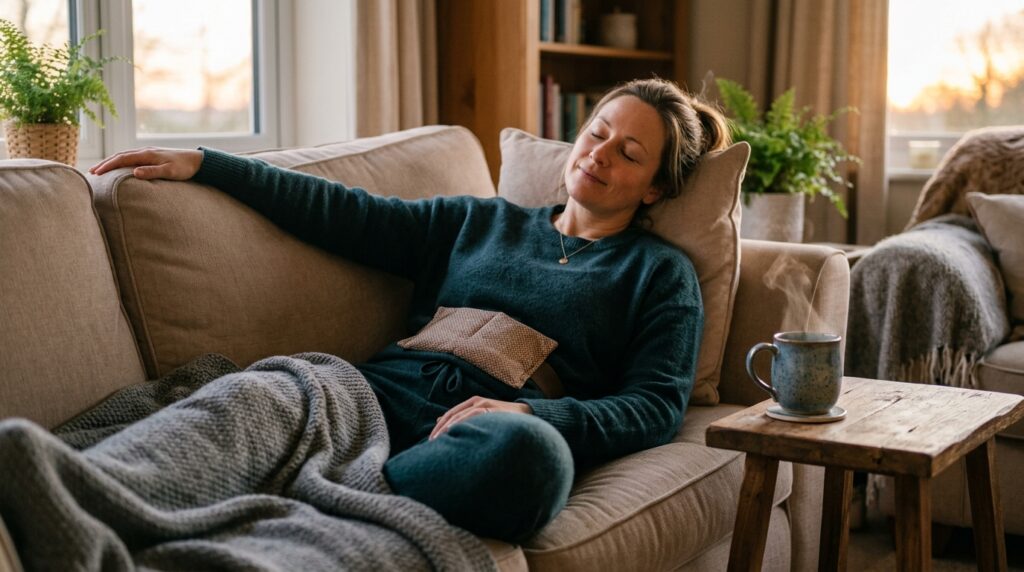
After stretching, the next step is to gradually warm your body from the outside and inside.
Heat packs and warm drinks are optional, but they can be helpful tools for recovery if used safely.
1) Choosing and Using a Heat Pack
A gentle heat pack can help keep your lower back, abdomen, or shoulders warm after stretching, which may make lingering aches and chills feel less intense.
When choosing a heat pack, think about:
- Target area – Lower back, abdomen, or shoulders; choose a shape that fits the area well.
- Reusability – Microwaveable or hot-water-based packs you can use multiple times are often more economical.
- Fabric and comfort – If the pack touches your skin, look for soft fabric and check for any materials you may be sensitive to.
Safety tips:
- Follow the heating instructions carefully and do not exceed the recommended microwave time.
- If your skin is sensitive, place a thin towel or layer of clothing between your skin and the heat pack.
- Limit use to about 15–20 minutes at a time and stop if your skin feels too hot, itchy, or irritated.
Remember that a heat pack is a supportive comfort tool, not a medical treatment for serious illness.
2) Warm Tea to Support Gentle Warming
A cup of warm tea can help your body feel warmer from the inside and add a calming ritual to the end of your day.
- In the evening, choose low- or no-caffeine options such as herbal or grain teas.
- During the day, a light black tea or blended tea can also work if caffeine does not disturb your sleep.
- Teas containing ingredients like ginger, cinnamon, or jujube are often enjoyed for their warming qualities and can pair well with a recovery routine after cold air exposure.
If you have a sensitive stomach, allergies, or certain medical conditions, always check the ingredients and choose a tea that feels comfortable for you.
Everyday Tips for Getting Through AC-Heavy Days
1) Prepare on Days You Know the AC Will Be Strong
If you know you will spend hours in a cold office, classroom, or café, try to bring a bit of protection with you:
- A light cardigan or shawl
- A small lap blanket
- Socks or an extra layer for your feet
Preventing your body from getting too cold in the first place makes the end-of-day recovery much easier.
2) Anchor the Routine at the End of the Day
Choose a regular time, such as after your evening shower, to run through:
- 10 minutes of full-body stretching
- 5 minutes of warmth (heat pack + warm tea and calm breathing)
Health information sources often note that keeping up gentle, regular physical activity is helpful for managing muscle and joint discomfort and maintaining overall energy levels.
Repeating a short routine at roughly the same time each day helps your body adapt to a rhythm and makes it easier to get through the summer without feeling constantly drained.
Keep Your Other 15-Minute Recovery Routines Connected
If your neck and shoulders are still tight after days at the office, you may also like my 15-Minute Neck and Shoulder Stretch Routine for Desk Workers.
For days when your lower back and knees feel heavy from housework rather than cold air, try the 15-Minute Recovery Stretch Routine for Your Back and Knees After Housework.
FAQ: Common Questions About AC Fatigue and Recovery Stretches
Q1. Is this routine enough if I feel like I am getting sick?
This routine is designed for mild stiffness and fatigue after being in cold air, not for treating high fever or severe illness. If you have strong symptoms such as high fever, severe muscle pain, difficulty breathing, or symptoms that last for several days, you should see a doctor rather than relying on stretching and warmth alone.
Q2. Can I do this routine even if I already exercise regularly?
Yes. On heavy workout days, you might treat this as a gentle cool-down in the evening. On rest days, it can serve as light movement to keep your body from feeling too stiff from air conditioning or sitting.
Q3. How often should I use a heat pack and warm tea?
You do not need them every day. Use them on days when you feel chilled or achy from AC, and pay attention to how your body responds. If you have a condition that is sensitive to heat or certain ingredients (for example, skin conditions or specific health issues), follow your healthcare provider’s advice.
Learn More: Air Conditioning Syndrome and Muscle Stiffness
For an overview of how cold indoor air and air conditioning can affect your muscles and overall health, you can explore these trusted English-language resources.
https://www.webmd.com/a-to-z-guides/ss/slideshow-what-ac-does-to-your-body
To understand how cold and temperature changes can lead to muscle stiffness and what gentle movement can do to help, you can explore this discussion of cold-related muscle tightness and stretching.
https://www.health.harvard.edu/exercise-and-fitness/essential-stretches-to-fight-stiff-winter-muscles
Leave a Reply