Upper-Body Movement Break: A 15-Minute Desk Routine
If your upper body feels stiff after prolonged computer work, this gentle sequence offers a change of position. It is not a posture correction or treatment plan.
Maintaining the same position for an extended period can contribute to muscle fatigue, even when the position is neutral. The aim here is simply to move through a comfortable range and interrupt a static work period.
Use any part of this 15-minute routine when a break fits your day. There is no evidence-based requirement to do every movement or to use a specific time of day.
Before you start
Move gently and stay within a comfortable range — this is a reset, not a workout. Avoid forcing any position, and stop if you feel sharp pain, dizziness, or tingling down your arms. If you have a shoulder or neck injury, check with a professional first.
The 15-minute reset
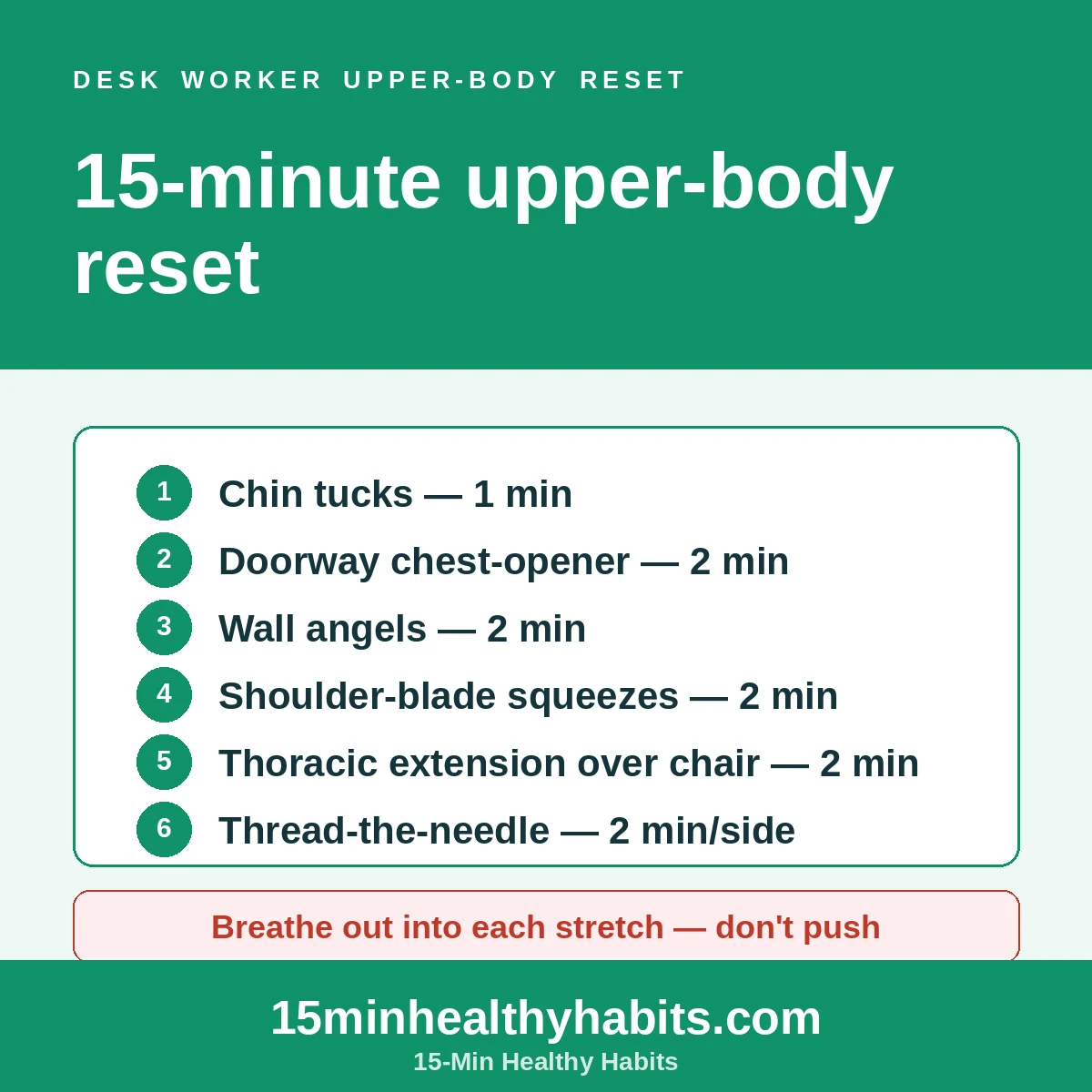
1. Chin tucks (1 min)
Sit tall and draw your chin straight back, making a gentle "double chin," without tilting your head. Keep the motion small and stop if it causes dizziness or radiating symptoms.
2. Chest-opener doorway stretch (2 min)
Stand in a doorway, forearms on the frame at about shoulder height, and step one foot through only until you feel a mild chest stretch. Lower the arms or skip it if the shoulder feels pinched.
3. Wall angels (2 min)
Stand with your back near a wall, arms in a comfortable "goalpost" shape. Slowly slide your arms within the range available without forcing your back, elbows or hands against the wall.
4. Shoulder-blade squeezes (2 min)
Sitting or standing, gently draw your shoulder blades together and down. Hold briefly, release, and avoid shrugging or forcing the range.
5. Thoracic extension over the chair (2 min)
Sit, support your head with your hands, and gently extend your upper back over a stable chair back. Keep the movement in a comfortable range and avoid pulling on the neck.
6. Seated thread-the-needle (2 min each side)
Reach one arm under the other and across your body, letting your upper back round gently within a comfortable range. Switch sides, then finish with a few slow shoulder rolls.
Pair movement with workstation changes
OSHA recommends placing the monitor directly in front, with the top line at or slightly below eye level, and arranging controls so you do not need to over-reach. NIOSH also supports short breaks and changes of position during computer work. Use those principles rather than trying to hold one supposedly perfect posture all day.
Turn it into a follow-along routine
Want these paced with timers? Build one with our free 15-minute stretch routine builder. If tight shoulders and neck are your main issue, the dedicated neck & shoulder routine goes deeper.
As an Amazon Associate, 15-Min Healthy Habits earns from qualifying purchases. Some links on this page are affiliate links — at no extra cost to you.
When to see a professional
Seek medical advice if pain is severe, worsening, follows an injury, persists despite self-care or includes numbness, tingling or weakness. Stop the routine and seek prompt care for sudden neurological symptoms, trouble walking or balancing, or bladder or bowel changes.
Sources reviewed
This article shares general wellness information and is not medical advice. Everyone's body is different — listen to yours, and consult a qualified professional for persistent or serious pain.