Neck and Shoulder Movement Break for Desk Workers
Prolonged desk work and an uncomfortable monitor position can contribute to neck and shoulder fatigue. This gentle sequence is a movement break, not a diagnosis.
MedlinePlus lists bending over a desk for long periods and a monitor positioned too high or low among common contributors to neck strain. OSHA likewise notes that prolonged awkward head and neck positions can fatigue supporting muscles.
Here is a 15-minute sequence of six gentle movements for a change of position. It cannot determine the cause of pain and should not replace individual care.
Before you start
The neck is delicate, so move slowly and gently. Never force a stretch or crank your head into position. You're aiming for a mild stretch, not a crack. If you feel dizziness, sharp pain, or tingling in your arms or hands, stop and check with a professional.
The 15-minute routine
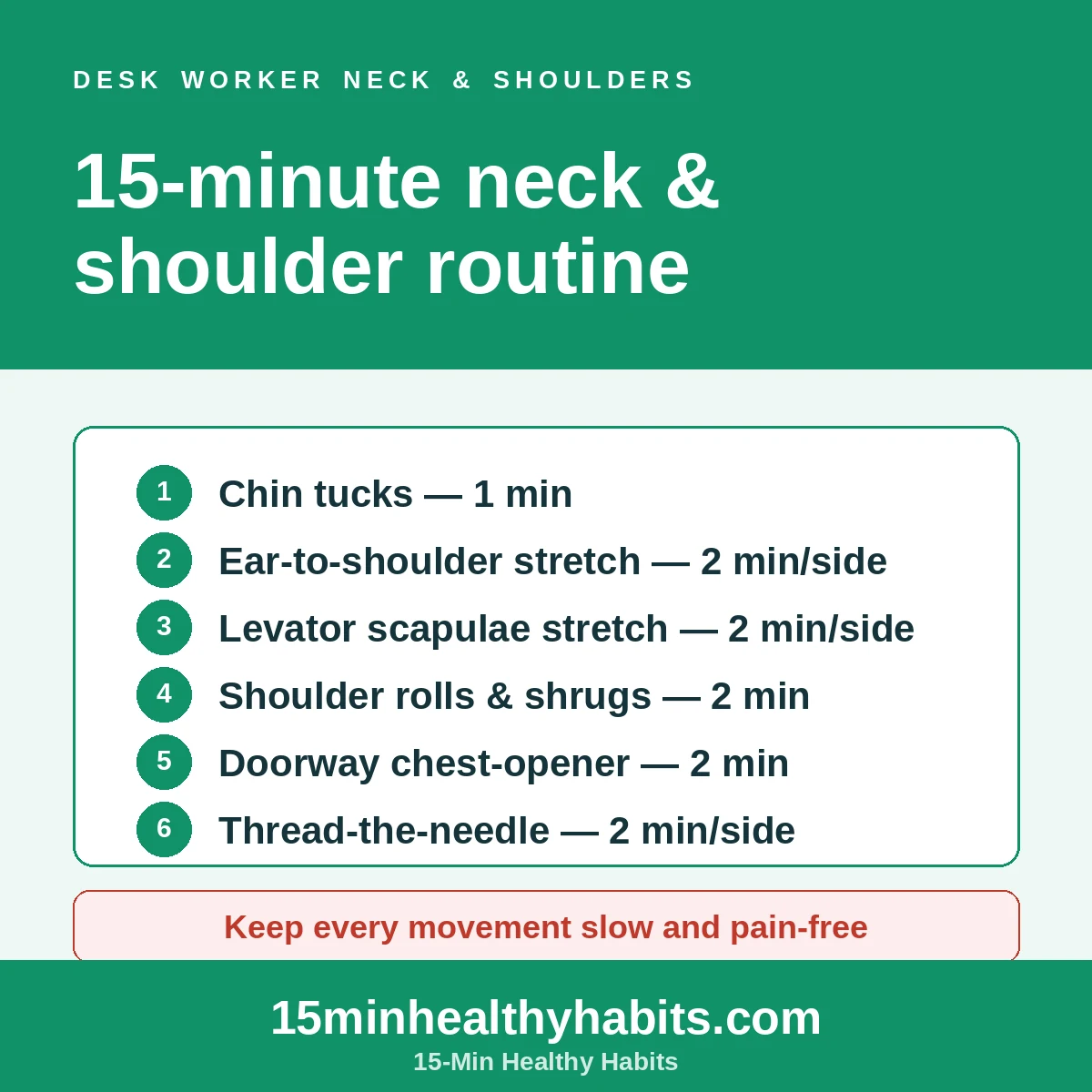
1. Chin tucks (1 min)
Sit tall and, without tilting your head, gently draw your chin straight back — like making a "double chin." Hold for a breath, release, and keep the motion small.
2. Ear-to-shoulder side stretch (2 min, each side)
Drop your right ear gently toward your right shoulder without lifting the shoulder. For a little more, rest your right hand lightly on the left side of your head — no pulling, just the weight of the hand. Feel the stretch down the left side of your neck. Switch sides.
3. Levator scapulae stretch (2 min, each side)
Turn your head slightly to the right, then look down within a comfortable range. Use only light hand guidance, if any, and switch sides.
4. Shoulder rolls and shrugs (2 min)
Roll both shoulders slowly backward in comfortable circles, then shrug them up toward your ears, hold briefly, and release without forcing the drop.
5. Chest-opener doorway stretch (2 min)
Stand in a doorway, forearms on the frame, elbows about shoulder height, and step one foot through only until you feel a mild chest stretch. Lower the arms or skip it if the shoulder feels pinched.
6. Seated thread-the-needle (2 min, each side)
Sitting, reach your right arm under your left and across your body, letting your upper back round gently within a comfortable range. Switch sides.
Check the setup as well as taking breaks
OSHA recommends placing the monitor directly in front of you, at least 20 inches away, with the top line at or slightly below eye level. Arrange the keyboard and pointing device so you do not need to over-reach, and vary tasks or take short recovery pauses instead of holding one posture for long periods.
Build your own 15-minute routine
Want these paced out with timers so you can just follow along? Use our free 15-minute stretch routine builder to create a neck-and-shoulder routine tailored to what's bothering you today.
As an Amazon Associate, 15-Min Healthy Habits earns from qualifying purchases. Some links on this page are affiliate links — at no extra cost to you.
When to see a professional
Contact a health-care professional if neck symptoms do not improve with self-care, are severe, follow a fall or injury, or include numbness, tingling or weakness in an arm or hand. Seek urgent help for trouble walking or balancing, bladder or bowel changes, or other sudden neurological symptoms.
Sources reviewed
This article shares general wellness information and is not medical advice. Everyone's body is different — listen to yours, and consult a qualified professional for persistent or serious pain.