Eyes Tired After Looking at a Screen All Day? Try These 6 Practical Changes
Screen work can contribute to tired or dry eyes, but symptoms have more than one possible cause. Start with low-risk breaks and setup changes, not a self-diagnosis.
Digital eye strain (also called computer vision syndrome) is one possible explanation for tired, dry or blurry eyes during prolonged screen use. It is not the only explanation, and this page cannot diagnose the cause. The practical steps below follow occupational and eye-health guidance on screen breaks, blinking, glare and viewing distance.
Why screens tire your eyes
OSHA notes that prolonged monitor viewing may cause eye fatigue and dryness and that users often blink less while viewing a monitor. Glare, text that is hard to read, and an uncomfortable viewing distance can also contribute to strain or awkward posture.
6 practical changes you can start today
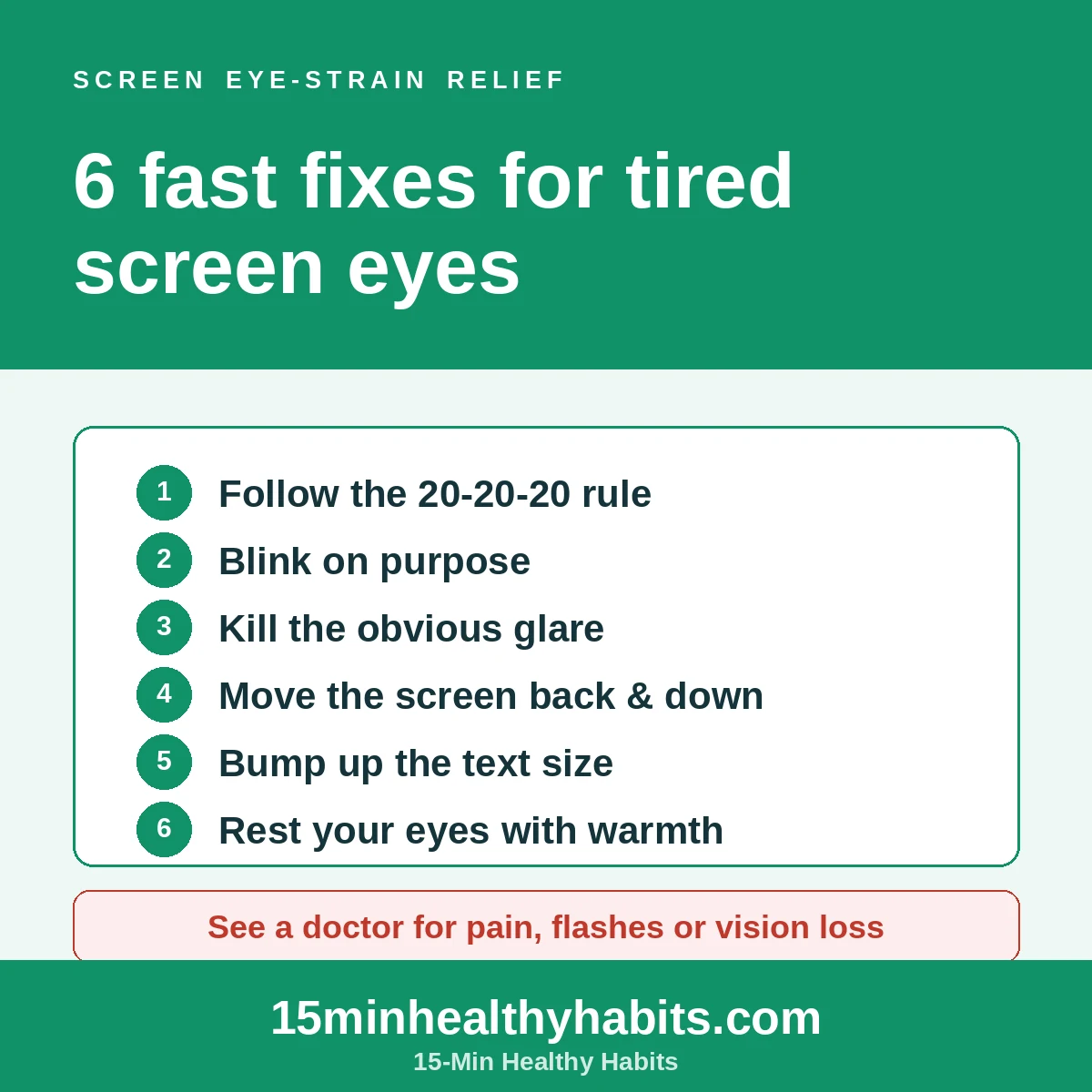
1. Follow the 20-20-20 rule
Every 20 minutes, look at something about 20 feet away for 20 seconds. The National Eye Institute gives this as a practical reminder to interrupt prolonged near-screen work.
2. Blink on purpose
At regular intervals, look away and blink slowly and fully several times. OSHA specifically recommends looking away and blinking to moisten the eyes.
3. Reduce obvious glare
Position your screen so windows are to the side, not behind or in front of you, and drop your screen brightness until it roughly matches the room.
4. Move the screen back and down
Use a comfortable viewing distance — OSHA gives a general range of 20 to 40 inches — and place the top of the screen at or slightly below eye level. Increase text size instead of leaning toward the screen.
5. Bump up the text size
If you're leaning in or squinting, increase the text size so you can keep a comfortable viewing distance.
6. Take a screen-free pause
Close your eyes briefly or look away from the screen and let your face relax. This is a rest cue, not a treatment for eye disease or persistent symptoms.
Make the 20-20-20 rule automatic
The reason most people know the 20-20-20 rule but never do it is simple: you can't feel the 20 minutes pass while you're focused. That's exactly what our free 20-20-20 Eye-Break Timer is for — it runs in the background and nudges you to look away, so the habit happens without you tracking it.
As an Amazon Associate, 15-Min Healthy Habits earns from qualifying purchases. Some links on this page are affiliate links — at no extra cost to you.
When it's more than tired eyes
See an eye-care professional for persistent or worsening eye pain, ongoing blurred vision, frequent headaches or other vision changes. A screen break cannot determine or treat the underlying cause.
Sources reviewed
This article shares general wellness information and is not medical advice. Consult a qualified eye-care professional for persistent or worsening symptoms.