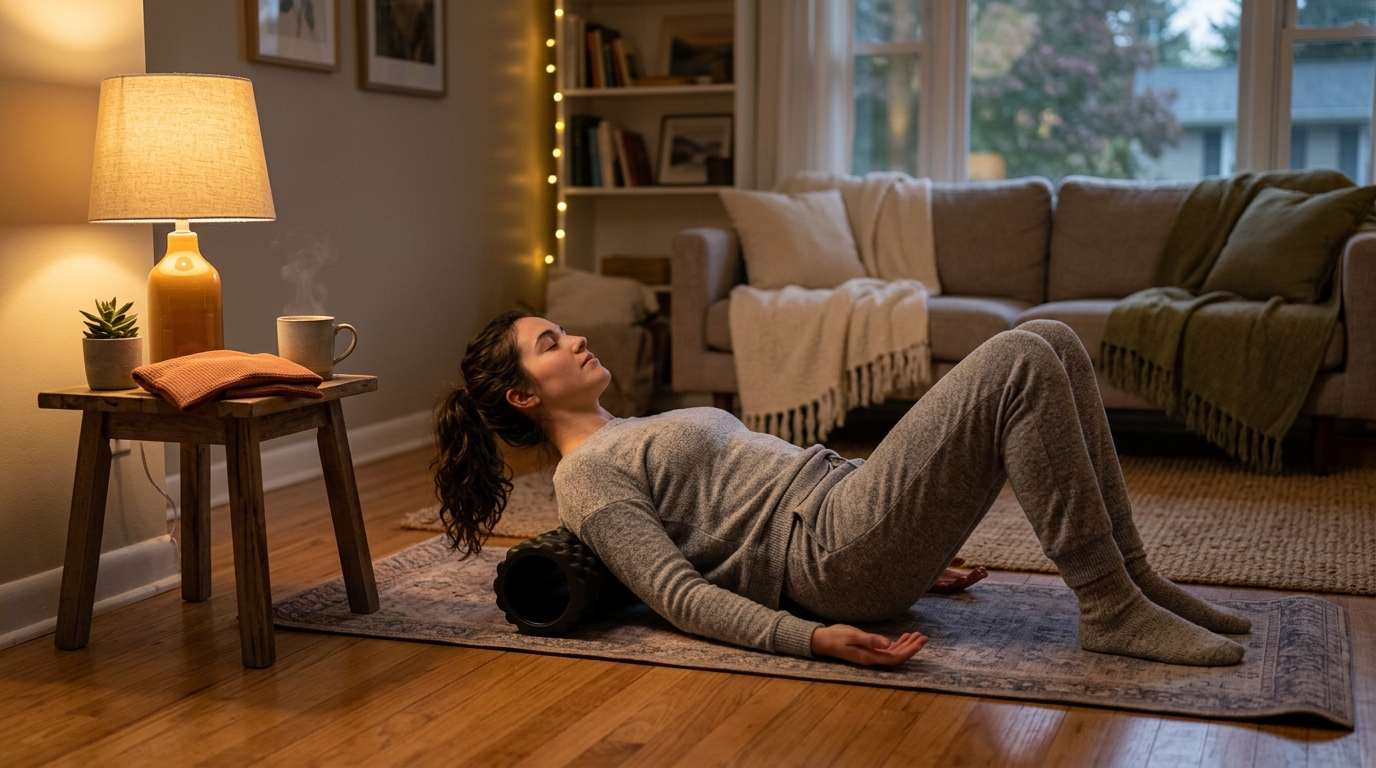
When Your Body Feels Like a Rock After Sitting All Day
If you sit for most of the day working or studying, by the time evening comes your lower back, hips, and thighs can feel like a solid block of tension. You might stand up from your desk and realize your whole body is stiff, heavy, and reluctant to move.
A simple foam roller and a few minutes of gentle heat can turn those “stone legs” into a body that feels softer and easier to move before bed. This 15-minute routine combines full-body foam rolling, quiet breathing, a warm heat pack, and a mild herbal tea to help you unwind at the end of a long day, without needing a full workout.
I tested this routine on evenings when my back and hips felt tight after hours of computer work, and even one 15-minute block made it easier to relax, fall asleep, and wake up with less stiffness the next morning.
Important Note Before You Start
This routine is for mild stiffness and fatigue, not for treating serious pain or disease. If your symptoms are severe, new, or persistent—such as sharp pain, strong numbness, or dizziness—stop the routine and consult a healthcare professional before continuing.
Foam rolling and heat packs can be helpful lifestyle tools, but they are not medical devices or a replacement for diagnosis and treatment.
Why Foam Rolling and Gentle Heat Can Help You Unwind
Foam rolling is a popular form of self‑myofascial release, where you use your body weight on a foam roller to gently compress the fascia and muscles. Guides from sports and rehabilitation fields note that comfortable foam rolling may help relax tight tissue, improve local blood flow, and support recovery when combined with light exercise and stretching.
Public health resources on musculoskeletal discomfort also emphasize that regular light movement and stretching can support joint mobility and help prevent long‑term stiffness, especially if you sit for many hours most days. Gentle heat packs applied safely over sore areas can further increase local blood flow, help muscles feel softer, and reduce stiffness around joints, especially in cooler or air‑conditioned environments.
This routine puts those ideas together in a simple structure you can actually do: about 10 minutes of full‑body foam rolling, followed by 5 minutes of quiet breathing with a warm pack and a mild, caffeine‑free tea.
Overview: 15 Minutes with Foam Roller, Heat Pack, and Tea
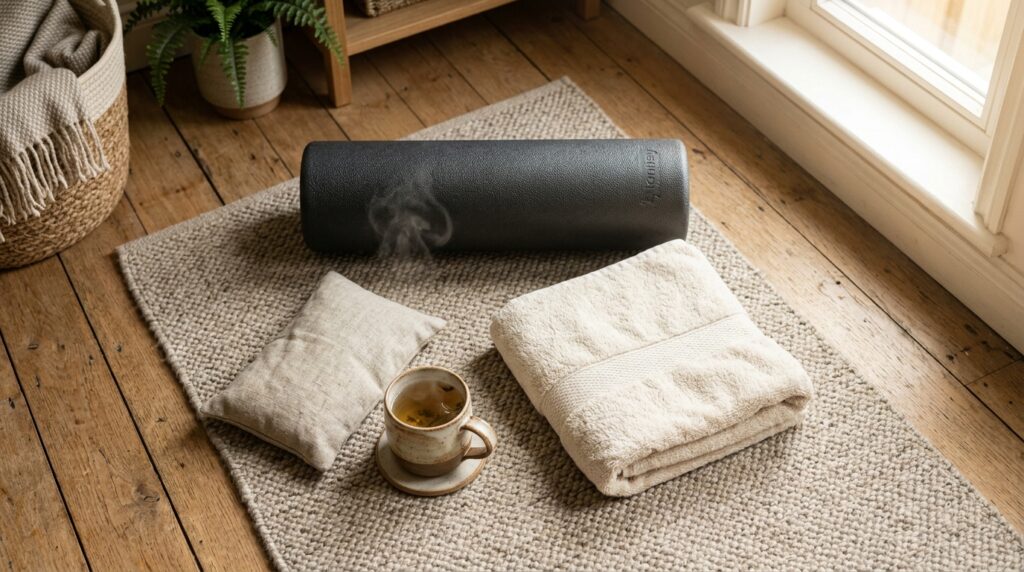
Here is the structure of the routine:
- 10 minutes: full‑body foam rolling
- 5 minutes: upper body and back
- 5 minutes: hips and lower body
- 5 minutes: breathing, heat pack, and a warm herbal tea
Think of the foam roller as a helper tool for relaxing tight muscles and fascia, not a cure or a medical treatment. Your goal is to feel “comfortably pressed and released,” not to chase pain.
If you need more ideas for gentle stretch routines around this, you might also like:
- 15-Minute Full-Body Recovery Stretch After Air Conditioning Fatigue – A routine for days when cold air has left your muscles feeling tight and heavy.
Step 1 – Choose the Right Foam Roller
Foam rollers come in many densities and sizes. For this routine:
- Density: Soft to medium density is usually easier for beginners and people with sensitive muscles. Very hard rollers can feel too intense at first.
- Material: EVA or similar soft foam works well as a starting point.
- Length: Around 45–60 cm (18–24 inches) makes it easier to roll your upper back, lower back, and thighs comfortably.
A roller with a bit of give helps press into the fascia and muscles without feeling like a hard pipe. If you want to compare options later, you can look for phrases like “EVA soft foam roller, 60 cm” when browsing online.
Step 2 – Upper Body and Back (About 5 Minutes)
1. Rolling Your Upper and Mid Back
- Sit on a mat with your knees bent and place the foam roller horizontally behind you.
- Cross your arms lightly over your chest to support your shoulders.
- Gently lean back so the roller sits under your upper back, just below your shoulder blades.
- Lift your hips slightly and use your legs to slowly roll up and down along your upper and mid back.
Focus on a smooth, controlled motion for about 30–60 seconds, resting if needed, and repeat up to two sets. Avoid pressing directly and forcefully into your lower back bones; keep the pressure on the muscular area of your upper and mid back.
2. Side Body and Lat Release
- Turn onto your side and position the roller under your armpit area, along the side of your ribcage.
- Extend the lower arm and use the top hand on the floor for support.
- Slowly roll from just below the armpit down toward the middle of your side, then back up.
Stay in a range that feels like “good pressure” rather than sharp pain. Spend about 30–60 seconds on one side, then switch. Keep your neck and shoulders relaxed, and stop or reduce pressure if you feel any stabbing or burning pain.
If you like pairing rolling with gentle stretches, you might also enjoy our 15-Minute Neck and Shoulder Stretch Routine for Desk Workers for days when your upper body feels especially tight.
Step 3 – Hips and Lower Body (About 5 Minutes)
1. Glute (Hip) Release
- Sit on the foam roller and place your feet flat on the floor.
- To focus on the right side, cross your right ankle over your left knee to form a “4” shape.
- Lean your weight slightly toward the right side so the roller presses into the right glute area.
- Slowly roll forward and back over the side of the hip and glute muscles for about 30–60 seconds, then switch to the other side.
Many people who sit for long hours develop tight glutes, which can contribute to a heavy or stiff feeling around the lower back and hips. Gentle rolling here can help those muscles relax and move more easily.
2. Front and Side Thigh Release
- Lie face down with the foam roller under the front of your thighs.
- Support your upper body on your forearms, like a low plank.
- Slowly roll from just above your knees up toward your hip crease, then back down, for about 30–60 seconds.
To target the outside of your thighs:
- Lean your body slightly to one side so the roller moves along the outer thigh.
- Roll slowly up and down for another 30–60 seconds, then switch sides.
Avoid pressing directly and forcefully on your knee joints; keep the roller on the muscle belly instead. Some guidelines recommend using myofascial rolling in a comfortable range and combining it with stretching for better flexibility and recovery.
If you want a pure stretching version without the roller for long sitting days, see our 15-Minute Full-Body Stretch Routine for Long Study Sessions.
Step 4 – Warm Heat Pack and Herbal Tea (About 5 Minutes)
After about 10 minutes of foam rolling, you will wrap up with breathing, gentle heat, and a warm drink.
1. Choosing and Using a Heat Pack
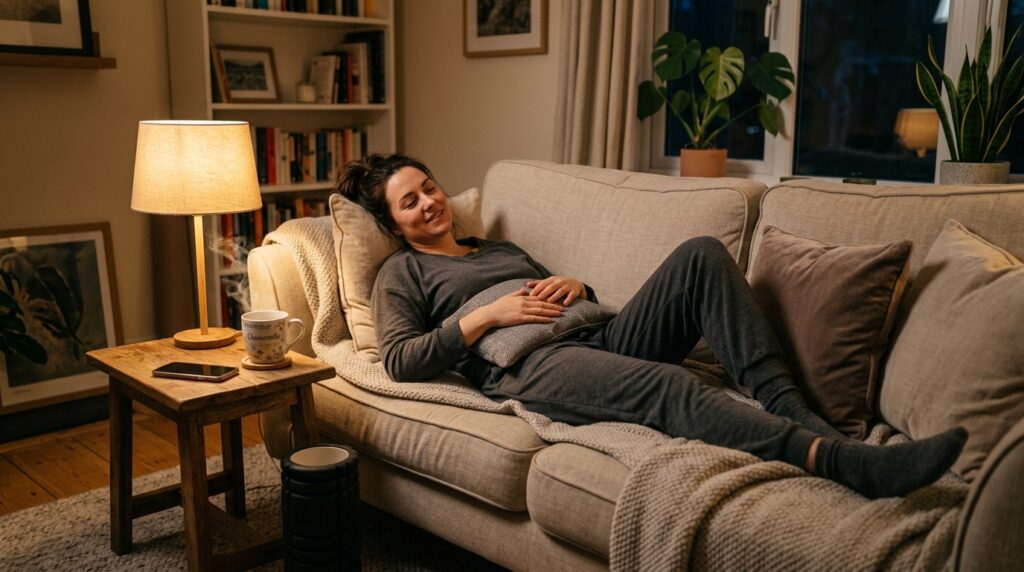
For everyday use at home, a reusable heat pack that can cover your lower back, belly, or shoulders is practical:
- Size: Medium-sized pad that fits across the lower back or around the waist.
- Type: Reusable packs (microwaveable grain packs or gel packs) are convenient.
- Area: Choose a shape that matches the area that feels most tense—lower back, neck/shoulders, or abdomen.
Heat applied safely can dilate local blood vessels, increase blood flow, and help muscles relax, which may ease stiffness and soreness after long periods of sitting.
Basic safety tips:
- Do not overheat the pack; it should feel warm, not burning.
- If your skin is sensitive, place a thin towel between your skin and the heat pack.
- Limit each session to around 10–20 minutes and stop if you feel dizzy, very uncomfortable, or overly hot.
2. A Mild, Warm Herbal Tea
To support relaxation from the inside, choose a warm drink that is:
- Low or zero caffeine (for example: chamomile, rooibos, barley, roasted grain teas, or mild ginger tea)
- Easy on your stomach, especially in the evening
These teas are not treatments for disease, but they can help you feel warm from the inside, support hydration, and create a calming “evening ritual” around your routine.
You can sit or lie comfortably with the heat pack on your back or belly, focus on slow breathing for a few minutes, and sip your tea as you feel the muscles soften.
Everyday Tips for Using This 15-Minute Routine
Fix One Time in Your Day
Instead of trying to do this “whenever you remember,” pick one clear time:
- 15 minutes before your evening shower
- 15 minutes before bed
- Right after you come home from work
Public health and ergonomics resources often suggest that regular, light stretching and brief movement breaks can support comfort and mobility over time, especially for people who sit a lot. When your body learns that “after work, we always do our 15-minute foam roller and heat routine,” it becomes a habit rather than another decision.
Adjust the Intensity Based on How You Feel
Some days, your body will feel more sensitive or tired:
- On those days, reduce the pressure on the foam roller, skip any positions that feel too intense, and focus more on breathing and the warm pack.
- If you ever feel sharp pain, strong tingling, chest pain, dizziness, or nausea, stop the routine and talk to a doctor or physical therapist before continuing.
Listening to your body is more important than finishing every step. The goal is to feel lighter and more comfortable, not to “push through” discomfort.
Related Routines You Might Like
- 15-Minute Full-Body Stretch Routine for Long Study Sessions – A gentle stretching sequence to undo stiffness after hours of reading or laptop work.
- 15-Minute Full-Body Recovery Stretch After Air Conditioning Fatigue – For days when cold air has left your muscles feeling tight and heavy.
- 15-Minute After-Work Stretch Routine When You Feel a Cold Coming On – A light, realistic routine for evenings when your body feels run-down.
Frequently Asked Questions
Q1. Is this foam roller routine safe if I have strong pain right now?
If you have sharp pain, strong numbness, new or unexplained pain, or any medical diagnosis affecting your spine or joints, talk to a doctor or physical therapist before trying this routine. This routine is designed for mild stiffness and fatigue after long days of sitting, not for treating serious or worsening pain.
Q2. How often should I do this 15-minute routine?
You can start with once a day, especially on work or study days when you sit for many hours. Over time, many people find that doing a short routine most evenings or after heavy sitting helps them feel less stiff and more comfortable moving the next morning. As always, adjust frequency if any area feels irritated.
Q3. What if the foam roller feels too painful?
Pain is a signal to reduce intensity. Try a softer roller, support more of your weight with your hands and feet, roll more slowly, and avoid staying on one spot too long. If you still feel sharp or burning pain, skip that area and focus on gentler stretches, breathing, and the warm pack instead.
Q4. Can I do this routine without the tea or heat pack?
Yes. The core of this routine is 10 minutes of gentle foam rolling for your upper body, hips, and legs. The heat pack and herbal tea are optional add‑ons that make the routine feel more comforting and help you unwind in a cooler or air‑conditioned environment.
Learn More
For more on foam rolling, heat therapy, and gentle movement for stiffness, see:
- PMC – The Effects of Self-Myofascial Release Using a Foam Roll
Research article reviewing how foam rolling as self‑myofascial release may influence flexibility, performance, and recovery.
https://pmc.ncbi.nlm.nih.gov/articles/PMC4637917/ - NASM – Foam Rolling: Applying the Technique of Self-Myofascial Release
Practical guide on how to use foam rolling safely as part of a warm‑up or cool‑down.
https://blog.nasm.org/foam-rolling-and-self-myofascial-release - Henry Ford Health – Hot Or Cold Therapy: What’s Best For Muscle Recovery?
Explains when to use heat versus cold, and notes that heat helps relax muscles by dilating blood vessels and promoting blood flow after the acute phase of an injury.
https://www.henryford.com/blog/2018/08/hot-cold-therapy-whats-best-for-muscle-recovery - RECOVER Injury Research Centre – Heat Therapy
Overview of how heat therapy may increase blood flow, improve tissue elasticity, and reduce muscle tightness when used appropriately.
https://recover.centre.uq.edu.au/treatment/heat-therapy
Leave a Reply